
Last Updated: November 3, 2026
Quick Summary
Prune flowering shrubs right after they bloom, not before, because that single rule protects the buds already forming for next season. Spring bloomers that flower on old wood should be trimmed within two weeks of the flowers fading, while summer bloomers that flower on new wood are best cut in late winter or early spring.
- Spring bloomers like lilac and forsythia bloom on old wood and should be pruned right after flowering.
- Summer bloomers such as panicle hydrangea, rose of Sharon and butterfly bush bloom on new wood and take late-winter cuts.
- Rebloomers flower on both old and new wood, so prune conservatively in late winter and deadhead through the season.
- Trim evergreen bushes in late winter to early spring and avoid heavy fall cuts that leave bare patches.
- Rejuvenate overgrown shrubs by removing the oldest third of stems at ground level over two or three seasons.
Table of Contents
- Why Pruning Timing Decides Next Year’s Flowers
- Old Wood Versus New Wood: The Rule That Settles Every Argument
- When to Prune Spring-Flowering Shrubs Like Lilac and Forsythia
- When to Prune Summer-Flowering Shrubs
- The Best Time to Trim Overgrown Bushes
- The Best Time to Trim Evergreen Bushes
- A Shrub-by-Shrub Pruning Calendar for Every Region
- What to Do If You Pruned at the Wrong Time
- Frequently Asked Questions
Why Pruning Timing Decides Next Year’s Flowers
The best time of year to prune flowering shrubs depends on one thing: when that shrub sets its flower buds. Cut at the wrong moment and you remove the buds before they ever open. Cut at the right moment and you get more blooms, not fewer.
Here is the short version. Prune flowering shrubs right after they bloom, not before. That single rule protects the buds already forming for next season.
Most shrubs fall into two groups. Some bloom on growth from last year. Others bloom on growth made this year. Each group has its own pruning window, and mixing them up costs you a full season of flowers.
Below, we walk through the rule, the exceptions, and a month-by-month calendar you can pin to the garage wall.
Old Wood Versus New Wood: The Rule That Settles Every Argument
Old wood is growth the shrub made last year. New wood is growth it makes this season. A shrub’s bloom habit tells you which one matters. This guide to maintaining specific garden plant types goes deeper beyond flowering shrubs.
Spring bloomers usually flower on old wood. Their buds form the summer before, then sit dormant through winter. Prune them in late winter and you cut off next year’s flowers before they open.
Summer and fall bloomers typically flower on new wood. They push fresh growth in spring, then bloom on it. Prune these in late winter or early spring while the plant is still leafless. The cut growth regrows fast and flowers on schedule.
| Shrub Type | Blooms On | Prune When | Risk If Mistimed |
|---|---|---|---|
| Spring bloomers (lilac, forsythia) | Old wood | Right after flowering | Lose next year’s flowers |
| Summer bloomers (panicle hydrangea) | New wood | Late winter, early spring | Little to no bloom loss |
| Rebloomers (some hydrangeas) | Old and new wood | Early spring, light trim | Fewer repeat blooms |
| Evergreens | Foliage, not flowers | Late winter to early spring | Bare patches, slow regrowth |
How to Tell Which Wood Your Shrub Blooms On
Watch the shrub for one full season. Note when flowers open and where they sit on the stems.
- Flowers appear before or with new leaves: likely old wood. Prune after bloom.
- Flowers appear weeks after full leaf-out: likely new wood. Prune in late winter.
- Flowers sit on last year’s stems, well below the tips: old wood for sure.
If you are unsure, skip heavy pruning for a year. Light trimming never hurts. Major pruning on a guess can.
When to Prune Spring-Flowering Shrubs Like Lilac and Forsythia
Prune spring-flowering shrubs within two weeks after the flowers fade. That window is the safest time all year, and it is not arbitrary: the shrub is about to shift from bloom production to bud production for next season, and a cut made in that transition removes the least.
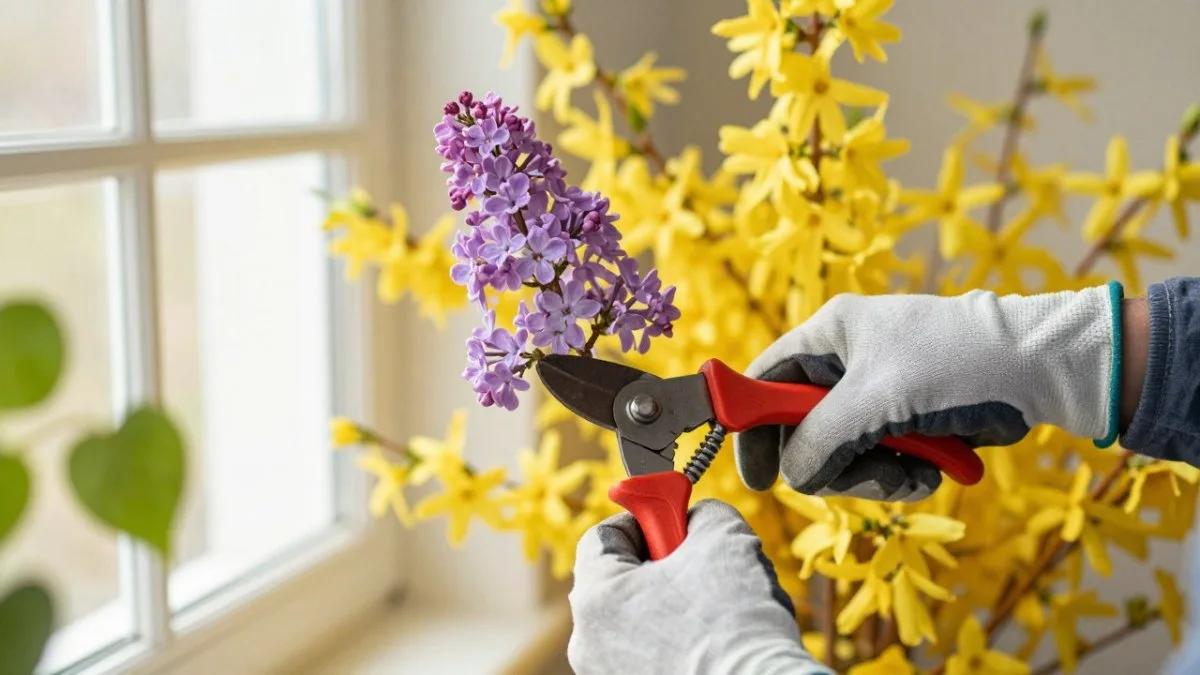
Lilac and forsythia both bloom on old wood. Their buds for next spring form in summer, so a fall or winter trim removes them. Cut too early in spring and you lose the current show.
Follow these steps:
- Wait until blooms fade and drop, not while they are still opening.
- Cut spent flower clusters just below the flower head, back to a pair of healthy leaves or a side shoot.
- Remove dead, damaged, or crossing branches first so you can see the structure.
- Thin out the oldest stems at ground level on overgrown shrubs rather than shearing the top.
- Stop by early summer. Buds set soon after, and late cuts cost next year’s flowers.
Two cut types matter here. A heading cut shortens a stem and pushes branching below the cut; use it sparingly on spring bloomers because it can force soft growth late in the season. A thinning cut removes a whole stem back to its origin and opens the shrub to light and air without stimulating a flush of new tips.
Timing shifts with climate. In colder zones, bloom and fade run later, so the two-week window may land in late May or early June; in mild zones it can arrive in March.
A common mistake is a hard cut in fall. The shrub looks tidy, then blooms sparsely or not at all the next spring.
Watch out: if you shear a lilac hedge into a tight ball every June, you remove the outer bud wood and push growth inward, and the shrub gradually blooms only at the top where the shears could not reach.
When to Prune Summer-Flowering Shrubs
The best time to prune summer-flowering shrubs is late winter or early spring, while the plant is still dormant and leafless.
Panicle hydrangeas, rose of Sharon, and butterfly bush all fit this group. Cut them back in late winter, before new growth starts. You can cut hard. The shrub regrows fast and blooms on the new stems.
- Late winter: cut back last year’s growth to a healthy framework of strong stems.
- Early spring: remove winter-killed tips once you can tell live wood from dead.
- Summer: light trimming only, and only if needed; heavy summer cuts remove the current season’s bloom wood.
One caution: not every hydrangea blooms on new wood. The Clemson Cooperative Extension hydrangea guide breaks down which types bloom on which wood.
Reblooming shrubs are the exception that trips people up.
Watch out: cutting a bigleaf hydrangea to the ground in late winter removes the old-wood buds and costs you the entire summer bloom, even though the plant survives and leafs out normally.
The Best Time to Trim Overgrown Bushes
The best time to trim overgrown bushes is late winter to early spring for most types. The plant is dormant, the structure is visible, and regrowth comes back strong.
But overgrown is its own problem. When a shrub has not been cut in years, the fix is rejuvenation pruning: cutting the oldest stems to the ground over two or three seasons.
- Year one: remove one-third of the oldest stems at ground level.
- Year two: remove the next third.
- Year three: remove the rest.
This restores shrub shape without shocking the plant. Spring bloomers will skip a bloom season or two, so plan the work around that.
If the job is too big, or the shrubs are damaged or diseased, professional help can be worth considering.
The Best Time to Trim Evergreen Bushes
Trim evergreen bushes in late winter to early spring, just before new growth starts. Light shaping in early summer is fine too. Avoid heavy cuts in fall, when the plant is slowing down.
Evergreens grow from green growth, not bare wood. Cut back into old brown stems and many won’t regrow. That leaves permanent bare patches.
Keep these points in mind:
- Late winter: major shaping, while dormant.
- Early summer: light trimming to tidy the shape.
- Fall: skip heavy pruning. New growth won’t harden before cold.
- Never: cut into bare interior wood on most evergreens.
For hedges, shear lightly and often rather than hard and rarely. Little cuts keep the shape tight without exposing bare stems.
A Shrub-by-Shrub Pruning Calendar for Every Region
Timing shifts with climate. Use your USDA Plant Hardiness Zone map to adjust the months below. Readers planning a full seasonal yard routine can see how pruning fits into professional lawn care service. Colder zones run later; warmer zones run earlier.
| Shrub | Bloom Time | Prune Window | Notes |
|---|---|---|---|
| Lilac | Spring | Right after bloom | Old wood; buds set in summer |
| Forsythia | Early spring | Right after bloom | Old wood; trim before July |
| Bigleaf hydrangea | Summer | After bloom | Old wood; check variety |
| Panicle hydrangea | Summer to fall | Late winter, early spring | New wood; cut hard |
| Rose of Sharon | Summer | Late winter, early spring | New wood |
| Butterfly bush | Summer | Late winter, early spring | New wood |
| Spirea (spring types) | Spring | After bloom | Old wood |
| Spirea (summer types) | Summer | Late winter | New wood |
Regional notes:
- Cold northern zones: push late-winter pruning to mid-March or later.
- Mild southern zones: start late-winter pruning in mid-February.
- Coastal and mild-winter areas: dormancy is short, so act fast.
What to Do If You Pruned at the Wrong Time
Wrong-time pruning is rarely fatal. Most shrubs recover within a season or two. The fix depends on how hard you cut.
- Light trim at the wrong time: do nothing. The plant will adjust.
- Heavy cut on a spring bloomer: skip the bloom this year and let it regrow. Prune correctly next season.
- Cut into bare evergreen wood: watch for bare patches and shape around them.
- Storm or winter damage: remove broken branches cleanly, anytime.
Steps to help a shrub bounce back:
- Remove dead and damaged branches first.
- Make clean cuts just above a bud or branch.
- Water during dry spells and skip fertilizer until recovery.
- Wait a full season before pruning again.
Watch out: cutting a spring bloomer hard in fall often means no flowers the following spring. It is not dead, just budless.
If a shrub is badly damaged or you are unsure, you can request a custom quote from Clean Cut Property Maintenance for help restoring your landscape. You can also contact us to ask about fixing a pruning mistake.
Frequently Asked Questions
Is October too late to trim shrubs?
It depends on the shrub. October falls in the fall pruning window, and cutting spring bloomers then removes the flower buds they already set for next year, so you lose the bloom. Fall is also a poor time for major pruning because cuts made while the plant is heading into dormancy heal slowly and leave it exposed to winter cold. Light trimming of damaged or dead branches is fine in October. Save major pruning of flowering shrubs for right after their bloom season or for late winter while they are dormant.
Why can’t you trim back bushes that are blooming?
The flowers you see are the end of a cycle that started months earlier, when the shrub formed its buds on the previous season’s growth. Cutting a blooming shrub removes those buds along with the flowers, so you lose the display for the rest of that season and sometimes for the next one. Wait until flowering finishes, then prune within about two weeks. That window lets the shrub push new growth and set buds for the following year before the growing season closes.
What shrubs can be cut back now?
The safe answer depends on the season and the shrub’s flowering cycle. In late winter or early spring, while the shrub is dormant and leafless, you can cut back summer-flowering shrubs such as hydrangea varieties that bloom on new wood, plus many non-flowering and evergreen shrubs. Right after a spring bloomer finishes flowering, that shrub is fair game for two weeks. When you prune summer-flowering shrubs, do it in late winter or early spring so the new growth has time to produce buds. If you are unsure, prune lightly and check the plant’s bloom season first.
How can you tell whether a shrub blooms on old wood or new wood?
Watch when the flowers appear. Shrubs that bloom in early to mid-spring, before or just as leaves emerge, usually flower on old wood, meaning buds formed on the previous season’s growth. Lilac and forsythia are classic examples. Shrubs that bloom in summer on fresh stems that grew that same season flower on new wood. A quick field check works too: look for fat buds along last year’s stems in fall or winter. If you find them, the shrub is setting next year’s flowers on old wood, so prune right after it blooms.
Pruning at the right time is the difference between a yard full of blooms and a season of bare stems. Clean Cut Property Maintenance takes the guesswork out of it with full-service landscape care, expert tree and shrub work, and a custom quote built around your property. Get started with Clean Cut Property Maintenance and give your flowering shrubs their best season yet.
