
Last Updated: October 28, 2026
Quick Summary
Signs your lawn needs professional aeration include water pooling long after rain, thin or worn grass in high-traffic areas, soil that resists a screwdriver, thatch thicker than half an inch, and fertilizer or water running off instead of soaking in. Compacted soil blocks air, water, and nutrients from reaching the roots.
- Standing water that lingers for hours after rain points to compacted soil.
- Use a long screwdriver: if it won’t push several inches in, the soil is likely compacted.
- Thatch thicker than about half an inch acts like a sponge that blocks nutrients.
- Cool-season grasses are best aerated in early fall; warm-season grasses in late spring into early summer.
- If water pools only in one low corner, grading may be the cause rather than compaction.
Table of Contents
- 1. Standing Water After Rain Lingers for Hours
- 2. Thin, Patchy Grass in High-Traffic Areas
- 3. Soil That Is Hard to Push a Screwdriver Into
- 4. Thatch Buildup Thicker Than Half an Inch
- 5. Fertilizer and Water Run Off Instead of Soaking In
- 6. The Best Time to Aerate a Lawn Across the Seasons
- 7. What Professional Lawn Aeration Costs and What Drives the Price
- What to Do After Lawn Aeration to Get Results
- Frequently Asked Questions
1. Standing Water After Rain Lingers for Hours
Puddles that hang around long after a storm are one of the clearest signs your lawn needs professional aeration. When soil is compacted, water cannot drain down through it, so it pools on the surface.
Watch out: if water pools only in one low corner, the cause may be grading rather than compaction, and aeration alone will not solve it.
2. Thin, Patchy Grass in High-Traffic Areas
Grass wears out fastest where people walk, play, and park, and those worn patches are often signs your lawn needs professional aeration. The paths between the back door and the driveway, the spot under the swing set, and the strip where kids cut across to the street often look worn while the rest of the lawn stays healthy. Compacted soil squeezes out the air and space roots need, so grass in these zones struggles to establish and recover.
3. Soil That Is Hard to Push a Screwdriver Into
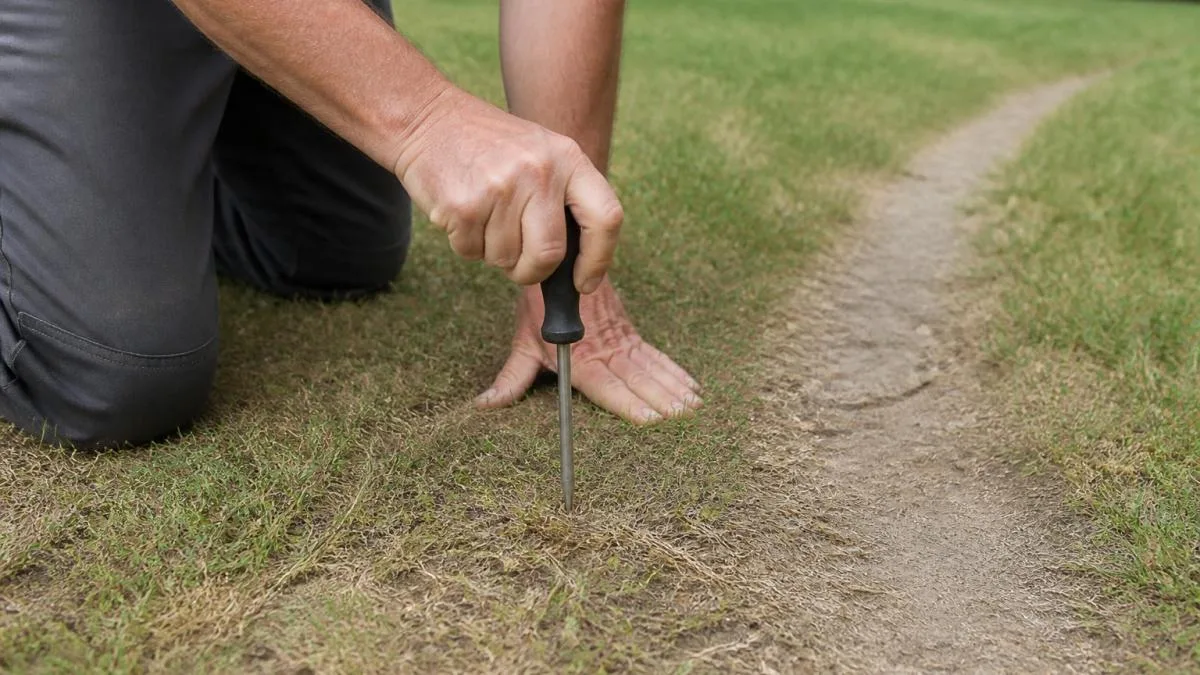
This is one of the simplest tests you can run yourself. Push a long screwdriver into the lawn after a rain. If you cannot push it several inches in with moderate effort, the soil is likely compacted. Healthy soil feels crumbly and gives easily. Hard, dense soil keeps roots shallow, which makes the lawn more prone to drought stress and heat damage in summer.
4. Thatch Buildup Thicker Than Half an Inch
Thatch is the layer of dead and decaying grass stems, roots, and debris that sits between the green blades and the soil. A thin layer is normal and even helpful. When it grows thicker than about half an inch, it acts like a sponge that sheds water and blocks nutrients from reaching the roots. Core aeration pulls plugs of soil and thatch out of the lawn, breaking up the layer and helping microbes break down what remains.
5. Fertilizer and Water Run Off Instead of Soaking In
If you water or fertilize and notice the product sitting on top, streaming toward the curb, or drying in puddles, the soil is not absorbing it. Many homeowners respond by applying more, which wastes money and can harm the environment through runoff.
6. The Best Time to Aerate a Lawn Across the Seasons
Timing matters more than most homeowners expect. For cool-season grasses such as Kentucky bluegrass, fescue, and ryegrass, early fall is generally the best window, when grass is actively growing and recovers quickly. For warm-season grasses such as Bermuda, zoysia, and St. Augustine, late spring into early summer works best during active growth. Avoid aerating during drought stress or deep winter dormancy. Aerating at the right time lets the lawn fill in the holes within a few weeks.
Aeration timing depends on the grass type, so use this summary to choose the right window.
| Grass type | Examples | Best aeration window |
|---|---|---|
| Cool-season | Kentucky bluegrass, fescue, ryegrass | Early fall, while grass is actively growing |
| Warm-season | Bermuda, zoysia, St. Augustine | Late spring into early summer, during active growth |
| Avoid | Drought stress or deep winter dormancy | Aeration here slows recovery |
7. What Professional Lawn Aeration Costs and What Drives the Price
Pricing depends on your property, so request a custom quote from Clean Cut Property Maintenance for current figures. When you are ready to hire, use this guide to choose a landscaping design company you can rely on. If you are unsure, read whether professional lawn service is worth it before deciding. For context, see a monthly cost breakdown of ongoing lawn maintenance to compare against aeration. You can also review what a landscape design and installation service includes and how it is scoped and priced.
What to Do After Lawn Aeration to Get Results
Our Lawn & Plant Care team can handle overseeding, fertilizing, and follow-up treatments on a schedule that fits your yard.
Frequently Asked Questions
What are the signs that a lawn needs aeration?
The most common signs are water pooling for hours after rain, thin or bare patches in heavily walked areas, soil that resists a screwdriver or garden fork, thatch thicker than half an inch, and fertilizer or irrigation water running off instead of soaking in. Look for several of these together. One sign alone can have other causes, such as a sprinkler problem or a fungal issue, so a quick soil probe after a watering helps confirm the diagnosis.
How often does a lawn need professional aeration?
Most lawns benefit from aeration once a year. Heavily used lawns, such as those with children, pets, or frequent foot traffic, may need it twice a year. Clay-heavy soils compact faster than sandy soils, so they often need more frequent service. Lawns with light use and loose soil can often go longer between treatments. If you are unsure, check soil hardness and water drainage each spring and fall to decide.
Is professional lawn aeration worth the cost?
For most homeowners, professional aeration is worth it when the signs above are present. Compacted soil limits root growth, water absorption, and nutrient uptake, which makes the lawn more prone to drought stress, weeds, and disease. Clean Cut Property Maintenance can assess your lawn and provide a custom quote, since pricing depends on lawn size, soil condition, and access. Request a quote from us to see what applies to your property.
What should I do after my lawn is aerated?
Leave the soil plugs on the surface so they break down naturally over one to two weeks. Overseed and apply fertilizer soon after aeration so seed and nutrients reach the open holes. Water the lawn deeply and regularly for the next several weeks to keep the topsoil moist, and avoid heavy foot traffic while the grass recovers. Results such as thicker growth and better drainage typically become visible within a few weeks to a season.
