
Last Updated: November 16, 2026
Quick Summary
The warning signs of water damage in residential landscaping are standing water that lingers more than 24 hours after rain, erosion and washed-out mulch, thinning or unusually green grass, pooling on patios and walkways, and stains or sagging near the foundation. Trace each sign back to grading, gutters, soil, or irrigation leaks before it reaches the house.
- A healthy lawn absorbs normal rainfall within a few hours, so water still sitting the next morning signals a drainage problem.
- Grading should drop roughly six inches over the first ten feet away from the house.
- Run each irrigation zone for two minutes and walk the line to spot leaks or weak pressure.
- Call a professional when water sits against the foundation or a wet spot returns after every storm.
- Photograph every wet spot and note the date and weather during your inspection.
Table of Contents
- Why Water Damage in Residential Landscaping Worsens Quietly
- 1. Persistent Puddles and Standing Water in the Yard
- 2. Common Standing Water in Yard Causes and How to Trace Them
- 3. The Signs of Poor Yard Drainage Most Homeowners Miss
- 4. Irrigation Leak Signs That Look Like Lawn Problems
- 5. A Step-by-Step Inspection Checklist to Diagnose the Cause
- 6. When to Call a Professional for Yard Drainage Help
- Frequently Asked Questions
Why Water Damage in Residential Landscaping Worsens Quietly
Water damage in residential landscaping rarely announces itself. It starts as a low spot that stays damp a day longer than the rest of the lawn, then a patch of grass that thins out, then a stain creeping up a foundation wall. By the time most homeowners notice, the problem has been working underground for months. The visible symptom is often not where the actual cause lives.
The reason is simple. Water follows the path of least resistance, and that path is usually buried. Soil compacts, gutters clog, grading shifts, and a sprinkler head fails behind a shrub. None of it looks dramatic. All of it compounds.
Below, we’ll walk through the warning signs in the order they typically appear, show you how to trace each one back to its cause, and tell you plainly when a shovel and a weekend won’t cut it. This guide goes further than a symptom list and gives you a diagnosis workflow you can run yourself.
1. Persistent Puddles and Standing Water in the Yard
Standing water that lingers more than 24 hours after rain is the clearest early signal of a drainage problem. A healthy lawn absorbs normal rainfall within a few hours. Water still sitting the next morning means the soil below is saturated, compacted, or graded toward that spot.
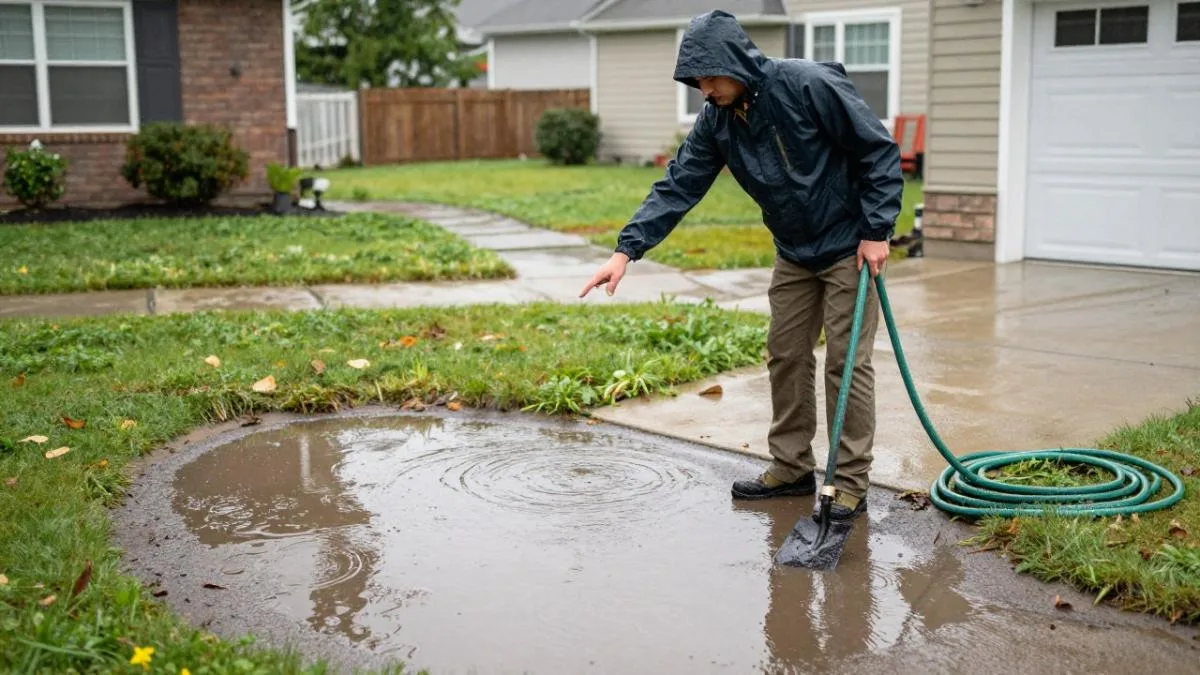
Watch out: a puddle that reappears in the same spot after every storm is not a cosmetic issue. It is a map of where your yard drains, and it will keep widening. Persistent puddles also breed mosquitoes and drown turf roots, which is why the grass around them dies first.
2. Common Standing Water in Yard Causes and How to Trace Them
Standing water in yard causes fall into four groups: grading that slopes toward the house, clogged or undersized gutters and downspouts, compacted or clay-heavy soil that won’t absorb water, and irrigation leaks feeding the same spot continuously. Tracing which one you have takes an afternoon, not a contractor.
Start with a garden hose test. Run water at the suspected high point and watch where it travels. If it heads toward the foundation, grading is the culprit. If downspouts dump water within a few feet of the wall, extend them. If the ground stays soggy days after rain with no rain in the forecast, suspect an irrigation leak.
Grading, Gutters, and Soil That Won’t Drain
Grading is the slope of your soil away from the house, and it should drop roughly six inches over the first ten feet. Many yards fail this test without anyone noticing. Gutters that overflow or downspouts that discharge against the foundation pour hundreds of gallons onto the same square of ground during a storm. And soil that has been driven over or stripped of organic matter stops absorbing water almost entirely.
If grading is the problem, professional regrading is often the durable fix. You can see how that work is handled on our grading services page.
Erosion, Washed-Out Beds, and Displaced Mulch
Erosion shows up as bare soil, exposed roots, and mulch pushed into piles or washed onto the walkway. These are signs of poor yard drainage that most homeowners read as “the mulch just moved.” It didn’t move on its own. Surface runoff is channeling across the bed because water has nowhere else to go.
Thinning, Patchy, or Unusually Green Grass
Two opposite symptoms, one cause. Thinning or patchy grass marks waterlogged soil where roots suffocate. An unusually green stripe or patch often marks a leak or a low spot holding moisture. If one section of lawn stays greener than the rest through dry weather, that section is getting water from somewhere.
3. The Signs of Poor Yard Drainage Most Homeowners Miss
The signs of poor yard drainage hide in plain sight: a walkway that pools after every storm, a foundation stain that grows a little each season, a basement that smells musty in spring. None of these look like landscaping problems, which is exactly why they get ignored until they are expensive.
Water stains along the foundation, bubbling paint, or sagging porch boards point to water damage near home foundation that has been ongoing. Basement or crawlspace moisture, mold growth, and wood rot follow the same trail. If you are seeing indoor dampness alongside outdoor puddles, the two are almost certainly connected.
Patio, Porch, and Walkway Pooling
Pooling on hard surfaces is a grading signal in miniature. Patios and walkways should shed water away from the house. When water stands on them, the base underneath has settled or the slab was pitched wrong. Left alone, that trapped water works into joints, freezes in winter, and accelerates cracking.
Water Damage Near Home Foundation: Stains, Sagging, and Moisture
This is the point where landscaping damage becomes structural risk. Water that pools within a few feet of the foundation finds every crack. Discoloration on brick or siding, soft wood at the sill, and a persistently damp crawlspace all point the same direction. This is also where termite damage risk climbs, since damp wood is exactly what termites look for. If you are seeing these signs, do not wait for spring.
4. Irrigation Leak Signs That Look Like Lawn Problems
Irrigation leak signs masquerade as lawn issues constantly. A sprinkler head that never quite shuts off, weak sprinkler pressure, or an unexplained jump in your water bill all point to a leak feeding a wet spot underground. The grass above it often looks lush, which fools people into thinking that zone is healthy.
Run each zone for two minutes and walk the line. Look for a head that sprays sideways, a geyser at a cracked fitting, or a section that stays wet for days. A single failed valve can saturate a large area before anything looks wrong above ground.
5. A Step-by-Step Inspection Checklist to Diagnose the Cause
Diagnosing a drainage problem is a sequence, not a guess. Work through these checks in order, and you will usually find the cause within an hour.
- Walk the yard after rain and mark every puddle with a flag
- Check the slope within ten feet of the foundation with a level
- Run a hose at the high point and trace where water flows
- Inspect gutters for overflow and downspouts for short discharge
- Run each irrigation zone and look for leaks or weak pressure
- Check foundation walls for stains, bubbling, or soft wood
- Photograph every wet spot and note the date and weather
| Problem | Likely Cause | First Fix |
|---|---|---|
| Puddle persists 24+ hours | Compacted soil or low spot | Aerate and regrade |
| Water flows toward house | Poor grading | Add soil, redirect flow |
| Mulch washed onto walkway | Surface runoff | Reshape beds, add swale |
| One zone stays wet | Irrigation leak | Inspect valves and heads |
| Foundation stain spreading | Water pooling at wall | Extend downspouts, regrade |
If the damage is already severe, with washed-out beds and standing water that has persisted for a season or more, yard restoration services may be the faster route back to a healthy landscape.
6. When to Call a Professional for Yard Drainage Help
Call a professional when water sits against the foundation, when a wet spot returns after every storm despite your fixes, or when the grading itself needs to change. Those jobs involve moving soil, redirecting flow, and sometimes installing drains, and getting them wrong makes the problem worse.
If your yard has been neglected for a season or more, professional cleanup is often the right first step before any drainage work begins. You can book professional yard cleanup to clear debris and overgrowth so the real drainage paths become visible. For homeowners who want the whole job handled, our residential services cover lawn, plant, and tree care together, so you are not coordinating three contractors. For a concrete plan on fixing the wet spots themselves, our guide on fixing backyard drainage issues walks through seven proven solutions.
Water damage in landscaping never fixes itself, and every season you wait gives it more time to work toward the foundation. If you have spotted standing water, erosion, or a stain creeping up the wall, the cheapest move is to get it looked at now. Clean Cut Property Maintenance provides comprehensive residential and commercial property maintenance and landscaping solutions, with a custom quote process for tailored solutions. Request a custom quote from Clean Cut Property Maintenance to discuss your property.
Frequently Asked Questions
What are the most obvious symptoms of a water problem in my yard?
The clearest symptoms are persistent puddles that linger more than 24 hours after rain, soggy or marsh-like soil, and thinning or patchy grass in low spots. You may also see washed-out mulch in landscape beds, soil erosion along slopes, and water stains near the foundation. If more than one of these shows up in the same area, it usually points to a drainage problem rather than a one-off weather event. Document the spots with photos after each storm so you can track whether they are getting worse.
How can I tell whether my sprinkler system is leaking?
Irrigation leak signs include unusually green or spongy patches of grass, weak sprinkler pressure at the heads, constantly wet soil in one area even days after watering, and an unexplained jump in your water bill. Check each zone one at a time and watch for heads that don’t pop up fully or fittings that stay wet when the zone is off. A licensed irrigation technician can pressure-test the system and locate the break quickly.
Can poor yard drainage damage trees and plants?
Yes. Waterlogged soil starves roots of oxygen and can lead to root rot, especially in trees and shrubs that prefer well-drained ground. You may notice yellowing leaves, dieback at the top, or trees that lean after storms. Persistent moisture also weakens the soil around root balls, which makes trees more likely to topple. If a prized tree sits in a wet area, fix the drainage before the next rainy season rather than waiting for visible decline.
When should I call a landscaping or drainage professional?
Call a professional when water pools for more than a day after rain, when you see water stains or moisture along the foundation, or when erosion is exposing roots or washing out beds. If you have already cleaned gutters and downspouts and the problem persists, the cause is likely grading or an underground drainage issue that needs a site assessment. Requesting a custom quote from Clean Cut Property Maintenance is a practical way to discuss your options.
