
Table of Contents
- Why a Professional Tree Trimming Service Near Me Beats DIY
- How a Tree Pruning Cost Estimator Works
- Best Time of Year for Tree Pruning
- ISA Certified Arborist Benefits for Your Property
- Emergency Tree Services and Storm Damage Cleanup
- Insurance and Liability Verification: What to Ask Before Hiring
- How to Get the Best Tree Trimming Service Near Me
- Frequently Asked Questions
Last Updated: September 21, 2026
Why a Professional Tree Trimming Service Near Me Beats DIY
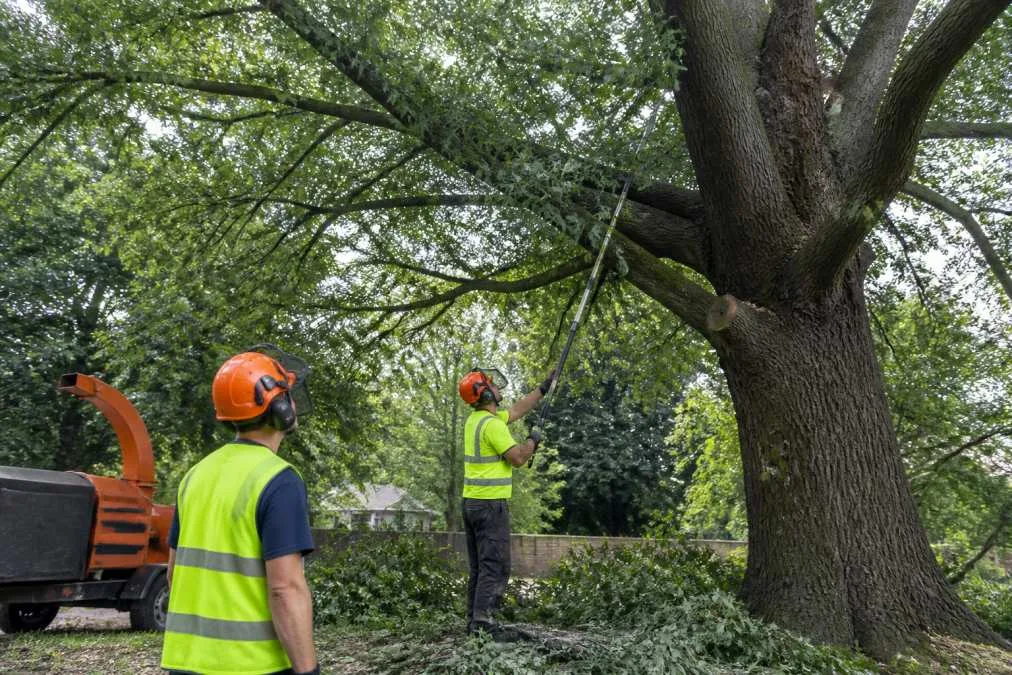
Hiring a professional tree trimming service near me is one of the few home maintenance decisions where the risk of doing it yourself genuinely outweighs the savings. Tree work is the most dangerous job in residential landscaping, and the equipment alone (chainsaws, pole pruners, climbing harnesses, chippers) costs more than most homeowners will ever recoup.
The Real Risks of DIY Tree Cutting
The most common mistake is assuming a small tree is a small job. A ladder, a borrowed chainsaw, and a free Saturday feel like enough until a limb kicks back or a branch falls the wrong way. Three risks show up again and again:
- Kickback and falls. Chainsaws kick back with no warning, and ladder work at height leaves no room for error.
- Wrong-cut damage. A cut made past the branch collar wounds the trunk and invites decay, sometimes killing a tree that looked healthy.
- Hidden hazards. Deadwood, power lines, and rot inside a limb are invisible from the ground.
Never attempt to cut a limb that is within 10 feet of a power line, no matter how small it looks. Contact with an energized line is frequently fatal, and utility companies handle this work for free in most service areas.
What to Look for in a Local Tree Trimming Service
A qualified local tree trimming service carries liability insurance, workers’ compensation coverage, and at least one credentialed arborist on staff. Ask for proof of all three before anyone climbs. A legitimate crew will also give you a written scope of work, a debris removal plan, and a clear answer on whether they chip the wood on site or haul it away.
How a Tree Pruning Cost Estimator Works
A tree pruning cost estimator is a tool or on-site assessment that prices a job based on tree size, species, access, and the volume of debris to be removed. No honest estimator produces a firm number from a photo alone. Most professional tree trimming service providers send someone out to walk the property, and that visit is where the real quote gets built.
What the On-Site Assessment Actually Measures
A thorough estimator walks the property and records specifics, not impressions. Expect them to note:
- Trunk diameter at breast height (DBH). Measured about 4.5 feet off the ground, this is the single best predictor of time and rigging needed. A 12-inch DBH tree and a 30-inch DBH tree are different jobs entirely.
- Canopy height and spread. Height determines whether a climber, bucket truck, or lift is required. Spread determines how much rigging and how many drop zones.
- Access path. Can a truck and chipper reach the tree, or does every limb have to be carried out by hand? Hand-carrying debris can double labor hours.
- Proximity to structures, wires, and hardscape. Working over a roof, driveway, or fence requires rigging to lower limbs in controlled pieces rather than dropping them.
- Species and wood density. Softwoods like pine cut and chip faster than dense hardwoods like oak or hickory.
- Debris volume and disposal. Chipping on site versus hauling changes the equipment and labor on the job.
How the Quote Gets Built
A written quote should separate the work into line items so you can compare bids fairly. A common structure looks like this:
| Line Item | What It Covers |
|---|---|
| Pruning labor | Climber and ground crew hours |
| Equipment | Chipper, bucket truck, or lift |
| Debris removal | Chipping on site or hauling away |
| Stump grinding | Only if a removal is involved |
| Disposal fees | Landfill or mulch facility charges |
Why Phone Estimates Are Unreliable
A ballpark figure given over the phone is a guess, not an estimate. The same species and height can price very differently depending on whether the tree leans over a roof, whether the ground is soft enough to support a truck, and whether the homeowner wants the wood left for firewood or hauled away.
Ask the estimator to separate the price for cutting from the price for debris removal and stump grinding. Bundled quotes hide the line items, and separating them lets you compare bids fairly.
Red Flags in an Estimate
- A firm price quoted without ever visiting the property.
- A demand for full payment up front.
- No written scope of work.
- Pressure to sign on the spot for a “today only” discount.
Pricing depends on your specific property, tree count, and access, so ask for a written, itemized quote rather than a ballpark figure over the phone. Clean Cut Property Maintenance builds custom quotes this way, walking the property before committing to a number.
Best Time of Year for Tree Pruning
The best time of year for tree pruning is late winter or early dormancy for most species, when the tree is not actively growing and the structure is easiest to see. Pruning during dormancy also reduces stress on the tree and lowers the risk of disease entering fresh cuts.
Seasonal Pruning by Tree Type
Timing shifts by species, and getting it wrong can cost you a season of growth:
| Tree Type | Best Pruning Window | Avoid |
|---|---|---|
| Deciduous shade trees | Late winter, before bud break | Peak sap flow in early spring |
| Flowering trees | Right after bloom | Fall, which cuts next year’s buds |
| Evergreens | Late winter or early summer | Mid-summer heat stress |
| Oaks | Winter dormancy | Spring and summer, when disease spreads |
When to Skip Pruning Altogether
Skip pruning if a tree is already stressed by drought, disease, or recent storm damage. Cutting a weakened tree removes the energy reserves it needs to recover. Dead, diseased, or crossing branches are the exception; those come out regardless of season because they are a hazard.
ISA Certified Arborist Benefits for Your Property
An ISA certified arborist has passed an exam from the International Society of Arboriculture and committed to continuing education in arboriculture. That credential matters because tree care is a field where bad advice is common and the consequences are slow, expensive, and sometimes irreversible.
What the credential buys you:
- Correct diagnosis. A certified arborist identifies tree disease, pest damage, and structural defects that an untrained eye misses.
- Proper pruning technique. Cuts are made at the branch collar to protect the tree’s structural integrity and root system.
- Long-term tree health. Work is planned around tree longevity, not just the job in front of them.
- Documentation. Many arborists provide written assessments you can keep for insurance or resale.
Emergency Tree Services and Storm Damage Cleanup
Emergency tree services handle trees that have fallen on structures, blocked access, or split and are still standing. Storm damage cleanup is time-sensitive because a leaning tree can finish falling hours after the storm passes. When a tree is on a house, across a driveway, or tangled in a wire, call for emergency removal rather than waiting for a scheduled visit.
After storm damage, photograph everything before cleanup begins. Once the debris is hauled away, proving the extent of the loss to an insurer becomes much harder.
Insurance and Liability Verification: What to Ask Before Hiring
Insurance and liability verification is the step most homeowners skip, and it is the one that protects you from a five-figure bill if something goes wrong. If an uninsured worker is injured on your property, your homeowner’s policy can be on the hook. If a crew drops a limb through your roof and carries no general liability coverage, you may be paying for the repair yourself while you argue with your own insurer about whether the loss is covered.
The Two Policies That Matter
General liability insurance covers property damage and bodily injury the business causes to others, including your home, your fence, your neighbor’s car, or a bystander. Ask for a certificate of insurance (COI) that lists the policy effective dates, limits, and the insurer’s name.
How to Actually Verify Coverage
A certificate alone is not proof. Certificates can be altered or expired. Take these steps:
- Call the insurer listed on the COI. Use the phone number from the insurer’s website, not the number printed on the certificate. Confirm the policy is active and the limits match.
- Check the effective dates. A policy that expired last month does not protect you today.
- Confirm the named insured matches the company you are hiring. A COI for a different business name is a red flag.
- Ask to be named as an additional insured for the duration of the job. This gives you direct rights under the policy if a claim arises.
- Ask for a waiver of subrogation if your own insurer requires it. This prevents the tree company’s insurer from coming after you later.
Questions to Ask Before Any Crew Starts
- Can you provide a certificate of insurance for general liability?
- Do you carry workers’ compensation coverage for your crew?
- Will you name me as an additional insured on the policy?
- Who is the licensed arborist supervising this job?
- What is your process if a limb damages my roof or fence?
- Can you provide the insurer’s phone number so I can verify the policy?
Get the answers in writing. A crew that hesitates on any of these is a crew to walk away from.
If a tree service says it is “fully insured” but cannot produce a certificate with an insurer’s name and phone number, treat the claim as unverified. Verbal assurances are not coverage.
What Happens Without Verification
A common pattern is a homeowner who hires the lowest bid, a worker falls, and the homeowner’s policy pays the medical claim. Even when the claim is covered, it can raise your premiums and count against you at renewal. Verifying insurance before the crew arrives takes ten minutes and shifts that risk back where it belongs.
How to Get the Best Tree Trimming Service Near Me
Getting the best tree trimming service near me comes down to verification, not luck. Ask for proof of insurance, confirm the arborist credential, get a written itemized quote, and check recent customer reviews for the specific crew that will show up, not the company’s general reputation.
- Request two or three service quotes and compare line items, not totals.
- Confirm the free estimates you are offered are actually free, with no pressure to sign on the spot.
- Ask who handles debris removal and whether the wood is chipped or hauled.
- Check that the crew will protect your lawn, driveway, and root system during the work.
Frequently Asked Questions
How much does a professional tree trimming service near me cost?
Pricing depends on tree size, condition, location, and the amount of debris removal needed. Most companies provide free estimates after an on-site evaluation. Small ornamental trees cost less than large hardwoods near power lines. Request a custom quote from Clean Cut Property Maintenance for an accurate price tailored to your property.
What is the best time of year for tree pruning?
Late winter or early spring, while trees are dormant, is ideal for most species. This timing minimizes stress, reduces disease risk, and encourages vigorous spring growth. However, dead, damaged, or hazardous branches should be removed immediately regardless of season. Flowering trees are best pruned right after they bloom to avoid cutting off next year’s buds.
Why should I hire an ISA certified arborist instead of a general landscaper?
ISA certified arborists have passed a rigorous exam and maintain continuing education in tree biology, pruning techniques, and safety protocols. They can diagnose tree diseases, recommend cabling and bracing, and perform structural pruning that protects your tree’s long-term health. A general landscaper may lack this specialized training, risking improper cuts that damage the tree or create hazards.
Does tree trimming really increase my property value?
Well-maintained trees improve curb appeal and can increase property value. Regular pruning removes deadwood, improves tree canopy shape, and reduces risk of storm damage, making your landscape look cared for. Buyers notice healthy, hazard-free trees. Professional tree maintenance is an investment that supports tree longevity and your home’s overall market appeal.
Tree care is one of those jobs where the cheapest bid is often the most expensive decision, because a botched cut can cost you the tree, a roof, or worse. Clean Cut Property Maintenance provides full-service property maintenance, from expert tree care and pest management to landscape installation, so your yard gets handled by one team instead of five. Get a custom quote from Clean Cut Property Maintenance and let a qualified crew handle the hard work so you do not have to.