
Table of Contents
- Start With a Curb Appeal Walk-Through and Priority Plan
- Low-Cost Curb Appeal Improvements That Deliver the Biggest Payoff
- Front Yard Landscaping Ideas for Home Sale Season
- Clean, Repair, and Refresh: Pressure Washing, Siding, and Walkways
- Tree and Shrub Trimming Before Selling: What to Cut and When
- Your Landscaping Checklist Before Selling a House
- Budget Tiers, Timeline, and When to Hire a Professional
- Conclusion
- Frequently Asked Questions
Last Updated: October 17, 2026
Start With a Curb Appeal Walk-Through and Priority Plan
The fastest way to improve curb appeal for home sale is to see your house the way a buyer does: from the street, at walking speed, with fresh eyes. Curb appeal is the overall visual impression a property makes from the sidewalk and driveway, and it shapes whether a buyer decides to stop or drive past.
We tell sellers to start with a 15-minute walk-through. Stand across the street. Then walk slowly to your front door and write down everything you notice.
Here’s how to run it:
- Start at the street. Look at the roofline, siding, and front door together.
- Walk the path a buyer would take. Note cracks, weeds, and clutter.
- Photograph each problem area. Photos expose what habit hides.
- Rank each item by cost and effort. Cheap and fast goes first.
- Set a deadline for each task. Work backward from your listing date.
Most sellers guess. A written plan beats guessing every time.
Take your walk-through photos on an overcast day. Harsh sun hides stains and faded paint, and buyers often tour homes under gray skies.
Low-Cost Curb Appeal Improvements That Deliver the Biggest Payoff
Low-cost curb appeal improvements are small, affordable updates that make the exterior look cleaner and better cared for. The trap most sellers fall into is treating every cheap fix as equally valuable. They are not. A buyer forms a first impression in the first few seconds from the street, and that impression is driven by the entry, the lawn edge, and whether anything looks broken or dirty. Spend your low-cost budget in that order.
Here is a practical ranking of common low-cost projects and the reason each one earns its place. Treat the ranges as planning figures, actual quotes vary by market, material, and property size.
| Project | Typical DIY cost | Typical pro cost | Why it ranks here |
|---|---|---|---|
| Pressure wash walkway and siding | $0-$100 (rental or attachment) | $150-$500 | Removes the single biggest visual cue of neglect: grime |
| Fresh mulch in visible beds | $30-$150 in bags; more in bulk | $300-$800 installed | Makes beds look finished and signals active maintenance |
| Front door paint | $30-$80 | $150-$400 | The door is the focal point of the entry; color reads from the street |
| New house numbers and porch light | $20-$80 | $100-$250 | Sharpens the entry and improves evening showings |
| Matching planters and annuals | $40-$150 | $150-$400 | Adds color at eye level where buyers pause |
| Doormat and hardware swap | $20-$60 | n/a | Cheap, fast, and noticed at the threshold |
| Mailbox post scrub or paint | $10-$40 | $75-$200 | Removes a small eyesore at the curb |
| Decluttering toys, hoses, bins | $0 | n/a | Free, and clutter is one of the most common buyer turn-offs |
A few rules of thumb make the list work harder:
- Fix dirty before you fix pretty. Cleaning and pressure washing cost little and change the most square footage of first impression. Do them before you buy a single plant.
- Spend at the entry. The front door, house numbers, light fixture, doormat, and planters are the cluster buyers look at longest while they wait for the agent to unlock. A $100 refresh there often outperforms a $1,000 project at the property line.
- Match, don’t multiply. Two matching planters read as intentional; five mismatched pots read as clutter. Symmetry is free.
- Stop at tidy. Low-cost curb appeal is about looking cared for, not decorated. Overstyling can make a house feel like someone else’s taste.
Many sellers find these small improvements do more for visual appeal per dollar than a big project, because they remove the negatives buyers scan for, dirt, clutter, dead plants, burned-out bulbs, rather than adding features buyers may not value. A tidy, well-lit entry reads as a well-kept home, and that perception carries into how buyers judge the interior before they even walk in.
Photograph your entry before and after the low-cost pass. The side-by-side is the fastest way to see whether your money went to the areas buyers actually look at first.
Front Yard Landscaping Ideas for Home Sale Season
Front yard landscaping ideas for home sale season should look full, tidy, and easy to keep up, because buyers judge maintenance burden fast. Buyers want low-maintenance plants, not a garden that needs daily attention.
Focus on three layers: a clean lawn, shaped beds, and color near the door. Fresh mulch makes beds look finished. Annuals add color cheaply. Native and low-maintenance plants signal an easy yard to care for.
Here’s what works:
- Edge the beds. A sharp line between grass and mulch reads as care.
- Group pots by the door. Two matching planters frame the entrance.
- Fill bare spots in the lawn. Patch seed or sod before photos.
- Pull weeds from walkways. Weeds in cracks undercut every other effort.
Avoid planting anything fussy right before listing. A buyer who sees high-maintenance landscaping may worry about the upkeep.
Clean, Repair, and Refresh: Pressure Washing, Siding, and Walkways
Cleaning is the cheapest curb appeal win there is. Pressure washing removes dirt, mildew, and stains from siding, driveways, and walkways, and the change is immediate.
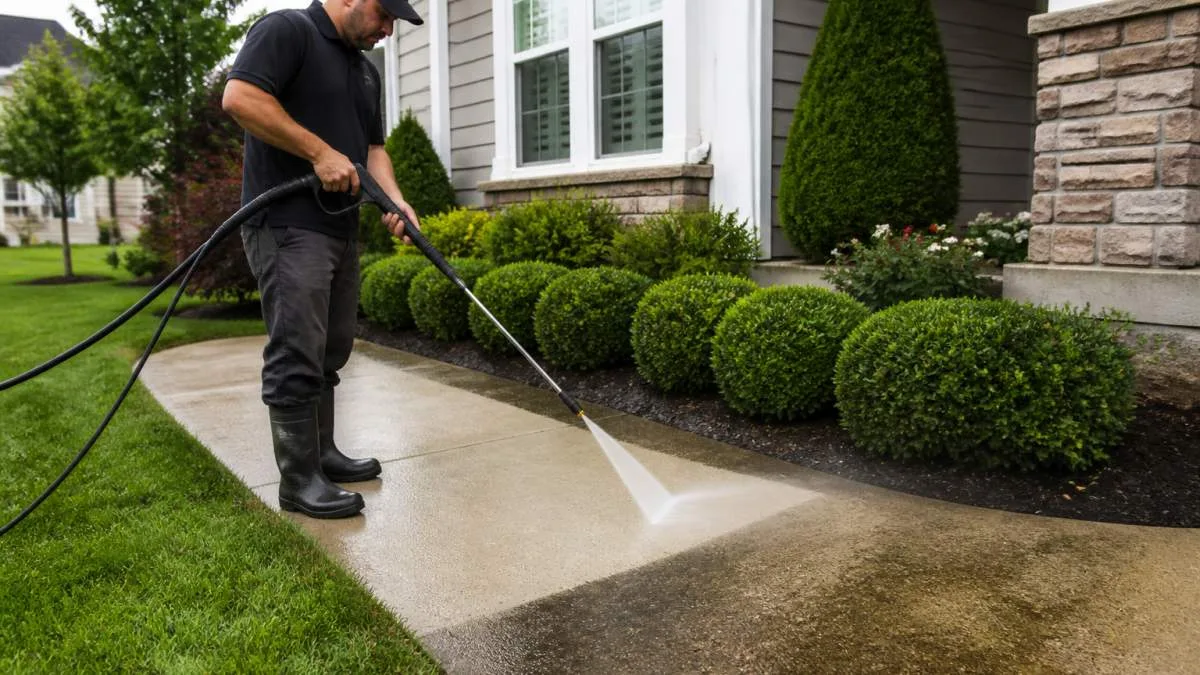
Work top to bottom, and use the right pressure for each surface. High pressure can gouge wood and strip paint, so keep the nozzle moving and test a hidden spot first. For siding, a soft wash with low pressure and cleaner is usually safer than a hard blast.
Then handle exterior repairs buyers always spot:
- Reattach loose gutters and downspouts.
- Replace cracked caulk around windows and doors.
- Patch walkway cracks and reset loose pavers.
- Scrub or repaint the front door and trim.
- Clean windows inside and out.
The U.S. Department of Energy’s guidance on home exterior maintenance notes that sealing gaps and keeping exterior surfaces sound also protects the home from moisture damage. Clean, repaired surfaces tell buyers the home was maintained.
Don’t pressure wash right before a showing without letting surfaces dry. Wet driveways and siding look darker and can track mud into the house.
Tree and Shrub Trimming Before Selling: What to Cut and When
Tree and shrub trimming before selling is about shape, safety, and sightlines, not heavy pruning. The goal is to make the house look cared for and easy to maintain, while removing anything a buyer might read as a future expense or a hazard.
Start with what buyers actually see from the street and the walkway:
- Shrubs blocking windows or the entry. Overgrown foundation shrubs hide the house and make the entrance feel cramped. Trim them back so windows, the door, and the house numbers are visible.
- Branches touching the roof, siding, or power lines. These read as neglect and can create real problems, moisture, pest access, and safety risk. Branches near power lines are not a DIY job.
- Dead, damaged, or crossing limbs. Dead wood is the most common tree defect buyers and inspectors notice. Remove it before photos.
- Suckers and low growth blocking sightlines. Clear the view from the sidewalk to the door so the entry reads as open and welcoming.
What to leave: healthy shade trees that frame the house, and established plantings that soften the facade. Mature landscaping is an asset, buyers pay for shade and established beds. The mistake is cutting too much and leaving the yard looking bare.
Timing matters more than most sellers expect. Light shaping and deadwood removal can happen any time. Heavy pruning is best done in the dormant season for most trees and shrubs, so avoid major cuts in the weeks right before listing if you can. Fresh, large pruning wounds look raw and can make a buyer wonder what went wrong. If a shrub must be cut back hard before a sale, give it as much lead time as your listing date allows.
DIY-versus-pro trade-offs:
| Task | Typical DIY cost | Typical pro cost | When to hire out |
|---|---|---|---|
| Light shrub shaping | $0-$50 (hand tools) | $75-$250 | When shrubs are large or numerous |
| Deadwood removal from small trees | $0-$100 | $150-$500 | When limbs are overhead or near structures |
| Large tree trimming | Not recommended | $300-$1,500+ | Always, when height or power lines are involved |
| Full landscape cleanup | $0-$100 | $200-$800 | When time is short before listing |
Call a professional when the job involves height, heavy equipment, or risk. Tree work near the roof or power lines, and cleanup of overgrown or storm-damaged areas, are jobs where a pro saves time and prevents costly mistakes, and where insurance and liability matter. For everything at ground level, light shaping and deadwood pickup are reasonable DIY projects.
One more consideration: accessibility. Trim so that walkways and steps are clear and safe for visitors, including buyers with strollers, canes, or wheelchairs. A clear path from the street to the door is part of the first impression, and it is one of the few curb appeal items that serves both appearance and safety.
Overgrown trees read as neglected and can scare buyers about cost. A tidy canopy says the property is cared for, and that message is worth more than the trimming itself.
Do not trim branches near power lines yourself. Contact the utility or a licensed tree service; this is a safety and liability issue, not a curb appeal shortcut.
Your Landscaping Checklist Before Selling a House
A landscaping checklist before selling a house keeps you from missing the small items buyers notice. Use this list and check each item off before photos and showings.
- Mow, edge, and water the lawn
- Pull weeds from beds, walkways, and driveway cracks
- Refresh mulch in all visible beds
- Trim shrubs away from windows and the walkway
- Remove dead branches and debris
- Add annuals or planters for color at the entrance
- Clean and repair the front door, trim, and hardware
- Wash siding, walkways, and driveway
- Replace burned-out bulbs in exterior light fixtures
- Clear hoses, toys, bins, and clutter from visible areas
- Check house numbers are clean and easy to read
- Sweep the porch and steps
Run the checklist again the week of your first showing. Yards change fast.
If you only do five things, do these: mow and edge, refresh mulch, clean the walkway and siding, clear clutter, and fix the front door. They cover the areas buyers see first.
Budget Tiers, Timeline, and When to Hire a Professional
Curb appeal work splits into three budget tiers, and most sellers can plan around them. The tiers below describe effort and scope, since quotes depend on your property.
| Tier | Typical Projects | Time Needed | DIY or Pro |
|---|---|---|---|
| Low budget | Cleaning, weeding, mulch, decluttering, new bulbs | 1 weekend | DIY |
| Mid budget | Door paint, planters, annuals, minor repairs, pressure washing | 1-2 weeks | Mix of DIY and pro |
| Higher budget | Tree trimming, landscape refresh, walkway repair, exterior painting | 3-4 weeks | Professional |
Timeline matters as much as budget. Start at least a month before listing so plants settle and repairs cure. If you’re selling in a few weeks, stick to cleaning, tidying, and small improvements.
When should you hire a professional? Call one when the job involves height, heavy equipment, or risk. Tree trimming near the roof or power lines, pressure washing that could damage siding, and drainage or overgrown cleanup are all jobs where a pro saves time and prevents costly mistakes. We handle tree care, lawn and plant care, and landscape cleanup as one service, so you’re not coordinating several contractors.
Sellers short on time or physical ability who want the yard photo-ready without doing the work themselves.
Season and climate change the plan too. In cold regions, fall is for cleanup and spring is for color. In hot, dry regions, water and shade matter more than new plantings. Match your projects to the season you’re selling in.
Conclusion
Selling a home is stressful, and the exterior is the one thing every buyer sees before they walk in. A clear plan, a clean and tidy yard, and a strong front entrance do the heavy lifting. Clean Cut Property Maintenance handles lawn and plant care, tree services, and landscape cleanup, so your property looks its best without you lifting a finger. Get a custom quote and get your yard photo-ready before you list.
Frequently Asked Questions
Which curb appeal improvements should I make before selling my home?
Focus on what buyers see first: the front entrance, landscaping, and cleanliness. Replace worn house numbers, repaint or clean the front door, trim overgrown shrubs, edge beds, and pressure wash walkways and the driveway. These low-cost curb appeal improvements cost little but change the first impression fast. If time is short, prioritize anything a buyer would notice from the street, then handle smaller details as your listing date approaches.
How much should I spend on curb appeal before listing my home?
Spending depends on your budget and the condition of the property exterior. A common approach is to set a modest budget for cleaning, paint, mulch, and annuals first, then decide whether larger projects like tree and shrub trimming or exterior repairs are worth it. Request quotes before committing so you can compare options. Clean Cut Property Maintenance offers a custom quote process to match work to your timeline.
Should I hire a professional to trim trees and shrubs before selling?
Hire a professional when trees are tall, near power lines, or badly overgrown. Correct tree and shrub trimming before selling improves sight lines to the house and removes dead branches that read as neglect. A crew can also shape shrubs evenly and clear debris in one visit, which matters when your listing date is close. For small hedges, DIY trimming is fine if you have the time and tools.
How can I improve curb appeal in one weekend?
A weekend is enough for high-impact basics: pressure wash the walkway and porch, clean windows and gutters, mow and edge the lawn, add fresh mulch, and set potted annuals by the front door. Wipe down light fixtures and make sure house numbers are visible from the street. These small improvements target the front yard and entrance, the areas prospective buyers study first, without requiring a contractor or a long project timeline.