
Table of Contents
- What Full Service Landscapers Actually Do
- How Professional Landscaping Increases Property Value and Curb Appeal
- Time-Saving and Convenience Benefits for Homeowners
- Professional Weed Control Service Cost and Budget Management
- How to Choose a Professional Landscaping Company
- Seasonal Landscaping Maintenance Checklist and Long-Term Care
- Sustainability and Expert Design in Modern Landscaping
- Frequently Asked Questions
Last Updated: September 27, 2026
What Full Service Landscapers Actually Do
Full service landscapers handle everything your property needs to look polished and stay healthy. They don’t just mow grass. They manage lawn care, plant health, hardscaping, drainage solutions, and seasonal maintenance all under one contract.
Coordinating multiple contractors wastes time and money. A full service provider eliminates that friction by handling tree trimming, weed control, and soil quality issues under one contract.
Core services include lawn maintenance, plant care, tree services, landscape design, and seasonal adjustments. Many also offer drainage solutions, pest management, debris removal, and installation, one team, one point of contact, comprehensive coverage.
This approach saves time and ensures continuity. Your landscaper learns your property, understands your preferences, and builds expertise over time.
When evaluating full service landscapers, ask what’s included in their “full service” package. The term varies by provider. Some include tree care; others charge separately. Get clarity upfront so you’re not surprised by add-on fees later.
How Professional Landscaping Increases Property Value and Curb Appeal
Professional landscaping directly impacts curb appeal, the first impression that shapes buyer and visitor perception.
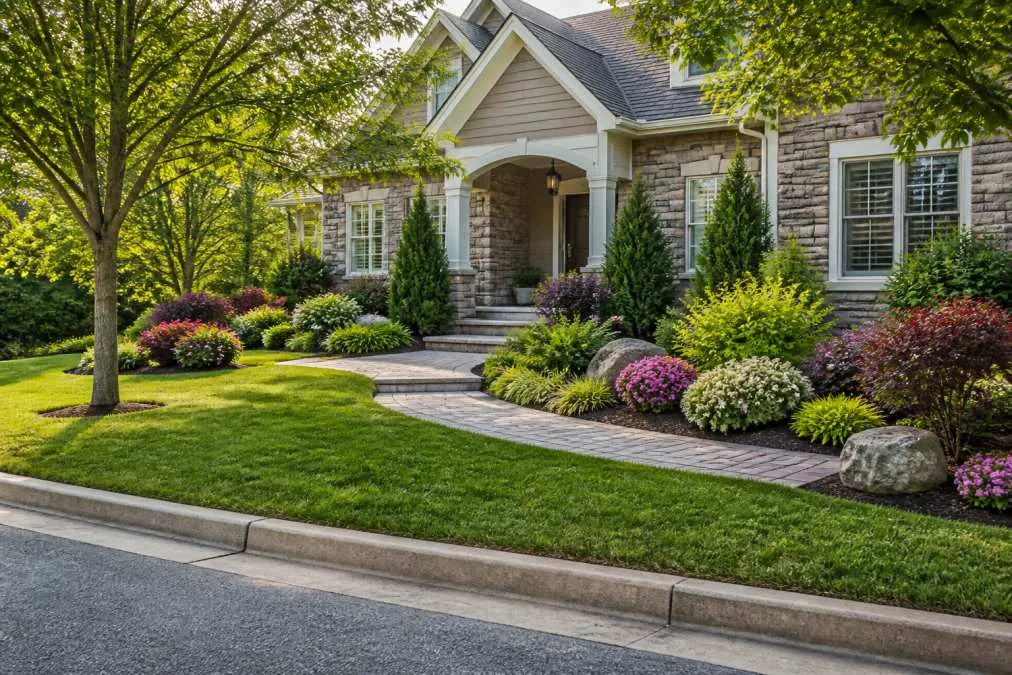
Homes with professional landscaping command attention and signal property maintenance, which buyers interpret as a sign of overall home condition.
Professional landscapers understand which plants thrive in your soil, how to arrange them for visual balance, and what hardscaping complements your home’s style, creating intentional outdoor living spaces.
Professional landscaping justifies higher asking prices for sellers, improves daily experience for long-term owners, and signals professionalism for commercial properties.
A professionally designed landscape requires less corrective work because the right plants are in the right places, preventing costly replacements.
Curb appeal is your property’s first conversation with potential buyers or visitors. Professional landscaping ensures that conversation starts strong.
Time-Saving and Convenience Benefits for Homeowners
Lawn maintenance, mowing, edging, trimming, weeding, and seasonal cleanup, adds up to dozens of hours per year and is unrealistic for homeowners with limited mobility, health issues, or packed schedules.
Full service landscapers reclaim that time, freeing weekends for things that matter to you.
Pushing a mower, bending for weeds, and hauling debris strain your back, knees, and shoulders. Professional landscapers have the equipment and training to do this work safely and efficiently.
You eliminate equipment investment, maintenance, storage, and replacement costs, the landscaper owns and maintains all specialized equipment.
Seasonal work becomes predictable on a calendar without you coordinating anything.
Professional Weed Control Service Cost and Budget Management
Most homeowners underestimate the true cost of managing their own landscape compared to professional full service landscaping.
Real Cost Comparison: DIY vs. Professional
Most homeowners underestimate the true cost of managing their own landscape compared to professional full service landscaping. Professional full service landscaping can often break even or cost less than DIY when you factor in time and equipment.
Budget Stability and Hidden Savings
Full service contracts consolidate costs into predictable payments, eliminating juggling invoices from multiple vendors and reducing administrative overhead.
Professional maintenance prevents expensive reactive work. Neglected soil requires replacement plantings; drainage problems can cause foundation damage. Preventative maintenance costs a fraction of emergency repairs.
Seasonal Cost Variation
Transparent contracts specify seasonal pricing variations upfront. Spring and fall typically cost more due to aeration, overseeding, and leaf removal. Winter costs vary by region based on snow removal needs.
Transparent Pricing Red Flags
Request itemized quotes specifying lawn maintenance frequency, plant care, seasonal tasks, mulch and amendments, add-on services, and exclusions. Avoid vague estimates. Confirm in writing how unexpected work is charged.
ROI on Landscape Investment
Landscaping improvements can provide a significant return on investment at resale, making it one of the highest-ROI home improvements available.
Full service landscaping often costs less than DIY when you account for your time, equipment, and maintenance. Transparent pricing and consolidated billing make budgeting predictable and prevent costly emergency repairs.
How to Choose a Professional Landscaping Company
Vetting a full service landscaper requires a systematic approach to avoid wasting money and ensuring quality results.
Step 1: Verify Credentials and Insurance
Confirm the contractor has a valid business license, general liability insurance, workers’ compensation insurance, and any specialized licenses required for tree work or pesticide application. If a contractor refuses to provide proof, eliminate them immediately.
Step 2: Evaluate Experience and Specialization
Aim for contractors with relevant experience. Ask for examples of similar properties and confirm they offer all services you need. Local contractors understand your region’s soil, plants, climate, and seasonal challenges.
Step 3: Review Portfolio and References
Portfolio work and client references reveal quality and consistency.
-
Before-and-After Photos: Request a portfolio of completed projects. Look for:
- Variety in design style (do they adapt to different aesthetics, or do all projects look the same?)
- Quality of hardscaping and planting bed edges (are they clean and well-maintained?)
- Plant health and maturity (do established landscapes look thriving, or sparse and struggling?)
- Seasonal maintenance (do their maintained properties look polished year-round?)
-
Client References: Ask for at least three references from clients with properties similar to yours. Call them and ask:
- How long have you used this contractor?
- Does the contractor show up on schedule?
- How responsive are they to questions or problems?
- Have there been any issues? How were they resolved?
- Would you hire them again?
- What surprised you (good or bad) about working with them?
Pay attention to patterns. One complaint might be an outlier. Multiple complaints about responsiveness or quality suggest a systemic problem.
Step 4: Assess Communication and Project Management
How a contractor communicates reveals how they’ll handle your account.
- Initial Consultation: Do they ask detailed questions about your property, goals, and preferences? Or do they give a generic pitch? Good contractors spend time understanding your specific situation before recommending services.
- Written Proposals: Insist on a written proposal that specifies services, frequency, pricing, and what’s included or excluded. Verbal agreements create misunderstandings.
- Communication Channels: How do you reach them? Email, phone, text, app? What’s their typical response time? A contractor who responds within 24 hours is more reliable than one who takes a week.
- Progress Updates: Will they provide photos or updates on completed work? Do they explain what they’re doing and why? Transparency builds confidence.
- Seasonal Planning: Do they proactively discuss upcoming seasonal work, or do you have to ask? Good contractors anticipate your needs.
Step 5: Compare Proposals Side-by-Side
Once you’ve narrowed to 2-3 qualified contractors, compare their proposals:
- Scope Alignment: Do all proposals cover the same services? If not, note the differences.
- Pricing: Compare total annual cost, not just monthly rate. One contractor might charge less per month but exclude services another includes.
- Frequency: How often will they service your property? Weekly, bi-weekly, or monthly? More frequent service costs more but may be necessary for your property type.
- Seasonal Adjustments: How do prices change seasonally? Are there add-on charges for spring cleanup or fall leaf removal?
- Contract Terms: How long is the contract? Can you cancel? What happens if you’re unsatisfied?
Red Flags to Avoid
- Refuses to provide insurance or licensing proof
- Gives vague pricing without itemization
- Pressures you to sign immediately
- Has no references or portfolio
- Quotes significantly lower than competitors (often indicates cutting corners)
- Doesn’t ask questions about your property or goals
- Requires full payment upfront
- Has no written contract or proposal
- Doesn’t return calls or emails promptly
Trust your instincts. If a contractor makes you uncomfortable, seems evasive about credentials, or pressures you into a decision, move on. Plenty of reputable landscapers are available. A bad contractor relationship is expensive and stressful to exit.
Seasonal Landscaping Maintenance Checklist and Long-Term Care
Seasonal landscaping maintenance checklist keeps your property healthy year-round. Different seasons require different work, and a professional provider knows what each season demands.
Spring: Cleanup from winter debris, soil preparation, plant pruning, mulch application, and irrigation system inspection. Spring is when dormant plants wake up, so timing matters for plant health.
Summer: Regular mowing, watering schedules, weed control, pest management, and deadheading for flowering plants. Summer is also when you notice drainage problems during heavy rain.
Fall: Leaf removal, plant preparation for winter, aerating and overseeding lawns, and gutter cleaning. Fall cleanup prevents spring problems.
Winter: Snow and ice management for commercial properties, dormant plant care, and planning for spring projects.
| Season | Primary Tasks | Frequency | Best For |
|---|---|---|---|
| Spring | Cleanup, soil prep, pruning, mulch | Weekly/bi-weekly | Plant health, growth prep |
| Summer | Mowing, watering, weeding, pest control | Weekly | Active growth, appearance |
| Fall | Leaf removal, plant prep, aeration | Bi-weekly | Winter protection, soil health |
| Winter | Snow removal, dormant care, planning | As needed | Maintenance, project planning |
Sustainability and Expert Design in Modern Landscaping
Sustainability and eco-friendly practices are increasingly important in landscape design. Modern landscaping moves beyond ornamental appearance toward environmental responsibility.
Frequently Asked Questions
What does full service landscaping mean?
Full service landscapers provide comprehensive care covering design, installation, and ongoing maintenance. This includes lawn care, plant selection and placement, hardscaping, drainage solutions, tree care, pest management, and seasonal maintenance. Instead of coordinating multiple contractors, you work with one team that handles everything from initial site assessment to year-round upkeep, ensuring consistent quality and integrated project management.
How much does professional weed control service cost in 2026?
Professional weed control pricing depends on yard size, weed severity, treatment frequency, and local market rates. Costs vary significantly based on whether you need one-time treatment or ongoing preventative maintenance. Rather than estimate, contact a professional landscaper for a custom quote based on your specific property and needs. Most companies offer flexible plans tailored to your budget.
What are red flags when hiring a lawn care service?
Watch for contractors who lack proper licensing or insurance, offer vague estimates without site assessment, have no references or online reviews, guarantee unrealistic results, or show poor communication. Avoid those who pressure you into long-term contracts without understanding your yard’s specific needs. A reputable landscaper will conduct a thorough site assessment, provide detailed written quotes, explain their approach, and offer verifiable references from past clients.
Is it more cost-effective to hire a full-service company or individual contractors?
Full-service landscapers often prove more cost-effective long-term because they provide integrated design and maintenance, reduce coordination overhead, and apply horticultural expertise to prevent costly mistakes. Individual contractors require you to manage multiple relationships and may lack the specialized equipment and comprehensive knowledge. Full-service providers also offer preventative maintenance that saves money by avoiding expensive landscape restoration later.