
Table of Contents
- Why Grass Gets Patchy in Shade and What to Do First
- The Best Grass Seed for Shade: What Actually Survives
- How to Overseed a Shady Lawn Step by Step
- How Often to Water Grass Seed in Shade
- Grass Alternatives for Shady Areas That Won’t Grow Grass
- Troubleshooting Persistent Patchiness
- Frequently Asked Questions
Last Updated: October 19, 2026
Why Grass Gets Patchy in Shade and What to Do First
Patchy grass in shaded areas is a thinning problem, not a mowing problem. Turf needs roughly four to six hours of direct sun to stay dense, and when it doesn’t get that, the plant slowly runs out of energy. The fix starts with knowing why the spot failed, not with buying seed.
The Real Causes of Shade Patchiness
Most thin spots under trees come down to a short list of causes. Find yours before you spend anything:
- Light starvation. Grass in deep shade grows weak and thin, then dies back.
- Tree root competition. Mature trees pull water and nutrients from the top few inches of soil, right where turf roots live.
- Compaction. Shaded soil stays wet longer and gets walked on more, so it packs down and roots suffocate.
- Poor drainage. Water sits in low, shady spots and rots the crown.
- Moss and weeds. Moss moves into damp shade first, and it signals the grass has already lost.
- Mowing too short. Scalping in low light removes the little leaf area the plant has left.
A Quick Diagnosis Before You Spend a Dime
Run this check before you buy a single bag of seed:
- Watch the spot through one full sunny day and note the hours of direct sun.
- Push a screwdriver into the soil. If it won’t go in easily, you have compaction.
- Dig a small handful of soil. If it’s soggy days after rain, drainage is the issue.
- Look at what’s growing there now. Moss means wet shade; bare dirt means dry shade or heavy foot traffic.
If you get fewer than three hours of direct sun in the spot, stop trying to grow standard lawn grass there. No seed blend beats physics. Move to a shade-tolerant option or a bed instead.
The Best Grass Seed for Shade: What Actually Survives
The best grass seed for shade is a fine fescue blend, usually mixed with a little perennial ryegrass for quick cover. Fine fescues tolerate low light and dry soil better than any other common lawn grass. Kentucky bluegrass and standard tall fescue will thin out in deep shade, no matter how well you care for them.
Here’s how the main options compare:
| Grass Type | Shade Tolerance | Best For | Main Weakness |
|---|---|---|---|
| Fine fescue | High | Deep shade, dry soil | Weak traffic tolerance |
| Tall fescue | Moderate | Light shade, busy yards | Thins in deep shade |
| Perennial ryegrass | Low to moderate | Quick cover in a mix | Short-lived, needs sun |
| Kentucky bluegrass | Low | Full sun only | Fails under trees |
Read the label and look for a blend labeled for shade, not just “sun and shade.” The shade percentage on the bag matters. A blend that’s mostly bluegrass with a pinch of fescue will fail.
How to Overseed a Shady Lawn Step by Step
Overseeding a shady lawn works when you open the soil, match the seed to the light, and keep the surface damp until roots take hold. Skip any one of those steps and the seed dries out or washes away. Here’s the sequence.
Step 1: Thin the canopy. Penn State Extension guidance on turfgrass shade notes that raising tree limbs and thinning branches lets more light through. Remove lower limbs to head height where you can.
Step 2: Prep the bare spots. Rake out dead grass and moss. Loosen the top inch of soil with a hard rake or core aerator. This step decides whether seed contacts soil or just sits on top of it.
Step 3: Seed at the right rate. Follow the bag rate for overseeding, usually about half the new-lawn rate. Spread in two passes at right angles for even coverage.
Step 4: Cover lightly. A thin layer of compost or straw holds moisture and hides seed from birds. Keep it light, no more than a quarter inch.
Step 5: Water and wait. Keep the surface moist, not soaked. We’ll cover timing next.
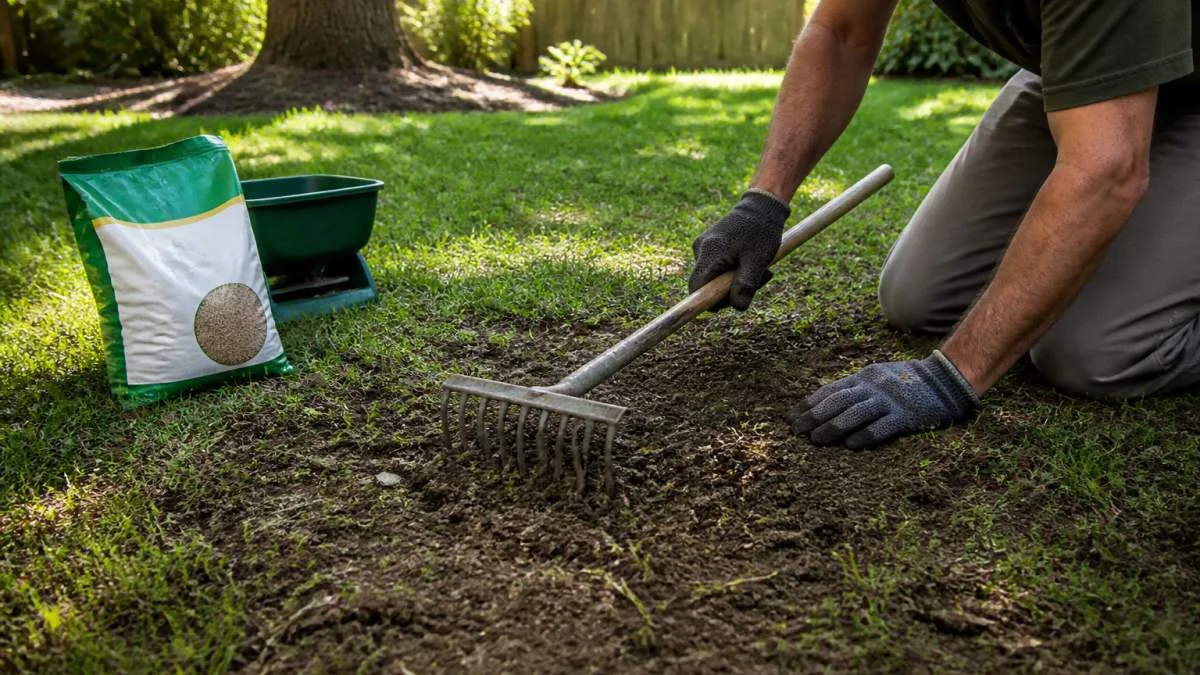
Preparing Bare Spots Before Overseeding
Bare spots need more than a rake. Loosen the soil, mix in a little compost, and level any low dips that hold water. If moss keeps returning, the soil is staying wet, so fix drainage with a shallow channel or a bit of grading before you seed. Seeding over moss is wasted money.
Seeding a compacted, waterlogged spot is a common overseeding mistake. The seed germinates, then drowns or rots within weeks. Fix the soil first, or you’ll repeat the job next season.
How Often to Water Grass Seed in Shade
Water new grass seed in shade two to three times a day for the first two weeks, keeping the surface damp but never soggy. Shaded soil dries slower than sunny soil, so cut back as soon as seedlings appear. Overwatering is the bigger risk here.
After the grass is up and about an inch tall, drop to once a day and water deeper. Once it’s established, water deeply once or twice a week. Deep, less frequent watering pushes roots down, which helps grass survive both drought and shade stress.
- Weeks 1-2: light mist, two to three times daily
- Weeks 3-4: once daily, slightly deeper
- Established: once or twice weekly, deep soak
Morning watering is best. Evening water sits overnight and invites fungus, especially in shade.
Grass Alternatives for Shady Areas That Won’t Grow Grass
When light is too low for turf, grass alternatives for shady areas save you money and frustration. The right pick depends on how wet the spot stays and how much foot traffic it gets.
- Ground cover: sweet woodruff, creeping phlox, or barrenwort for dry shade
- Moss: a deliberate moss garden for damp, deep shade
- Mulched beds: shade-loving shrubs and perennials with a mulch base
- Hardscape: pavers or gravel where nothing grows and traffic is high
- Artificial turf: for small, high-use spots where looks matter
A planted bed under a tree often looks better than a thin patch of struggling grass, and it needs far less work. If the whole yard is fighting shade, this is the honest answer.
Troubleshooting Persistent Patchiness
If a spot keeps failing after two overseeding attempts, the problem is environmental, not the seed. Work through these fixes:
| Problem | Likely Cause | Fix |
|---|---|---|
| Seed won’t germinate | Soil too dry or too wet | Check moisture daily, fix drainage |
| New grass dies in weeks | Not enough light | Thin canopy or switch to ground cover |
| Moss keeps returning | Wet, compacted soil | Aerate, improve drainage, add compost |
| Thin, weak blades | Compacted soil | Core aerate before reseeding |
| Weeds outcompete grass | Poor soil, low light | Improve soil, seed thicker in a blend |
The pattern across all of these is the same: fix the site, not just the seed. Grass in shade has little margin for error.
When to Call a Professional
Call a professional when the shade problem is structural: heavy tree canopy, grading and drainage issues, or a yard that’s failed repeated DIY attempts. Tree work, grading, and drainage fixes need the right tools and know-how, and getting them wrong costs more than hiring out.
That’s where we come in. At Clean Cut Property Maintenance, we provide comprehensive property maintenance and landscaping solutions, handling lawn and plant care, tree services, and landscape installation. We assess the light, soil, and drainage, then recommend the fix that actually fits your yard. If you’d rather not spend weekends fighting a losing battle with a rake, a custom quote is the easy next step.
Frequently Asked Questions
How do you fix patchy grass in a shaded area?
Start by diagnosing why the grass thinned: too much shade, compacted soil, or poor drainage. Then overseed with a shade-tolerant mix like fine fescue, loosen the top inch of soil, and keep the seed consistently moist until it germinates. Avoid heavy foot traffic for four to six weeks. If the area gets less than three hours of direct sun, consider grass alternatives instead of reseeding.
What is the best grass seed for shade?
Fine fescue blends (creeping red, chewings, and hard fescue) are the most reliable choice for shade in most regions. Tall fescue works in partial shade with moderate traffic. Avoid Kentucky bluegrass and perennial ryegrass in heavy shade because they need more sunlight to thicken. Look for seed labeled ‘shade mix’ and check that fine fescue makes up at least half the blend.
How often should you water grass seed in a shaded area?
Water lightly twice a day for the first two weeks, keeping the top quarter-inch of soil moist but not soggy. Shaded areas dry slower, so cut back to once a day if the soil still feels damp in the morning. After seedlings reach two inches, water deeply once or twice a week. Overwatering in shade is a common cause of failure.
What can you use instead of grass in areas that are too shady?
Ground covers like creeping thyme, sweet woodruff, vinca minor, and hostas thrive where grass won’t. Moss is a low-maintenance option for damp, deeply shaded spots. Mulch beds with shrubs or ferns also work. These alternatives eliminate the cycle of reseeding and dying that happens when grass lacks enough sunlight.
Patchy grass in shade is a site problem, and it won’t fix itself with more seed alone. If you’re tired of the cycle of reseeding and watching it fail, let Clean Cut Property Maintenance take it from here. We offer full-service landscape design and installation, expert lawn and plant care, and specialized tree care, all under one roof. Get a custom quote and let us turn that bare, shady spot into something that finally holds up.