
Table of Contents
- Why Curb Appeal Matters for Your Home’s Value
- Low-Cost Curb Appeal Ideas That Deliver Real Impact
- Front Yard Landscaping Ideas for a Polished Look
- Tree Trimming for Curb Appeal and Property Health
- Landscaping Tips for Selling a Home
- Seasonal and Climate-Specific Curb Appeal Strategies
- Low-Maintenance and Water-Wise Landscaping Choices
- Frequently Asked Questions
Last Updated: October 12, 2026
Why Curb Appeal Matters for Your Home’s Value
Your home’s exterior is the first thing people see. Whether you’re selling or simply want your property to look its best, increasing home curb appeal shapes that critical first impression.
The exterior tells a story. Overgrown landscaping, a weathered front door, and dim entryway lighting signal neglect. A clean, vibrant front yard signals care and attention.
Curb appeal affects property value in measurable ways. Homes with strong exterior aesthetics typically attract more interest and sell faster. Even if you’re not selling, a polished exterior creates a welcoming environment for family and guests.
The good news: you don’t need a complete overhaul. Strategic, targeted improvements deliver real visual impact without breaking your budget. Start with the highest-impact projects and build from there.
Low-Cost Curb Appeal Ideas That Deliver Real Impact
Some of the best ways to increase home curb appeal cost very little but transform how your property looks. These projects focus on cleaning, refreshing, and adding visual interest to your exterior.
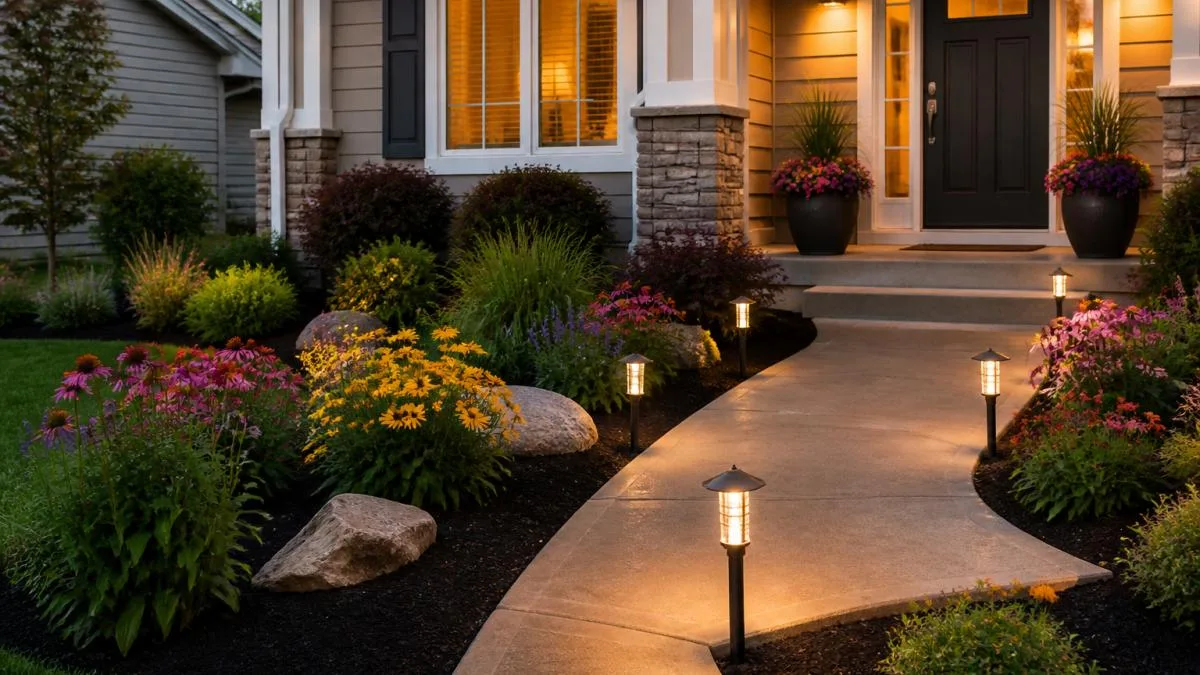
Cleaning and decluttering the exterior
A clean home exterior is the fastest way to improve first impressions. Dirt, debris, and clutter make even well-maintained properties look neglected.
Start with these cleaning tasks:
- Pressure wash the driveway and walkway to remove dirt and stains
- Clean the front porch or deck thoroughly
- Remove dead leaves, branches, and debris from landscaping beds
- Clear gutters and downspouts of leaves and buildup
- Wash windows and clean window frames
- Sweep and tidy the front entrance area
Decluttering is equally important. Remove items that don’t belong in the front yard: old planters, garden tools, hoses, or storage items. A clean, open front yard automatically looks larger and more inviting.
This single step often delivers the biggest visual improvement for the least effort. Many homeowners skip it because it seems too simple, but a deep exterior cleaning transforms how properties appear to visitors and potential buyers.
Refreshing the front door and entryway
Your front door is a focal point. It deserves attention because it anchors the entire entryway experience.
Consider these refreshing options:
- Paint the door, A fresh coat of paint in a bold or welcoming color instantly updates the entryway. Choose colors that complement your home’s exterior
- Replace hardware, New door handles, house numbers, and hinges cost little but look intentional
- Add a new welcome mat, A clean, attractive mat signals hospitality
- Install new lighting, A updated porch light or lantern improves both function and aesthetics
- Clean the door frame, Remove dirt, cobwebs, and weathering
The front door sets the tone for the entire property. Even modest updates make a noticeable difference. If your door is in poor condition, repainting is affordable and high-impact. If it’s structurally sound, fresh hardware and lighting deliver results without replacement costs.
Adding flowers and color to plant beds
Flowers and greenery bring life to the front yard. They add color, texture, and a sense of care that immediately improves curb appeal.
Start with these steps:
- Plant seasonal flowers in existing beds near the front entrance
- Choose colors that complement your home’s exterior
- Group plantings by height and color for visual impact
- Add flowering shrubs for year-round structure and spring color
- Include greenery and foliage plants for texture contrast
Flowers don’t need to be expensive. Seasonal plantings rotated throughout the year keep the front yard fresh without high cost. Focus on high-visibility areas: beds flanking the front door, corners of the front porch, or along the walkway.
The key is intentionality. A few well-placed flowering plants look deliberate and polished. Random or sparse plantings look neglected. Cluster flowers for maximum visual impact.
Front Yard Landscaping Ideas for a Polished Look
Front yard landscaping creates structure and visual interest. Unlike quick fixes, landscaping improvements establish a foundation for long-term curb appeal.
Refreshing mulch and updating planters
Fresh mulch is one of the most underrated curb appeal upgrades. It frames plant beds, improves soil health, and immediately refreshes the landscape appearance.
Mulch refresh checklist:
- Remove old, compacted mulch from plant beds
- Add fresh mulch in a consistent color and depth (2-3 inches) (Raised bed gardening)
- Edge beds crisply to define planting areas
- Top-dress around trees and shrubs with fresh material
- Choose mulch color that complements your home’s exterior
Planters add vertical interest and define entryway spaces. Update existing planters or add new ones strategically:
- Place matching planters on either side of the front door
- Use elevated planters to frame walkways
- Choose planters in colors that coordinate with your home’s palette
- Fill planters with seasonal flowers or evergreen plantings
Fresh mulch and updated planters work together to create a polished, intentional appearance. These improvements signal maintenance and care without requiring major landscaping work.
Improving exterior lighting and pathways
Lighting serves dual purposes: it improves safety and creates visual appeal. Pathway lighting and uplighting transform how your home appears at dusk and evening.
Lighting improvements include:
- Install pathway lights along walkways to the front door
- Add uplighting to highlight trees, shrubs, or architectural features
- Replace old porch lights with updated fixtures that match your home’s style
- Consider solar lights for budget-friendly, low-maintenance options
- Ensure lighting is evenly spaced and functional
Pathways guide visitors and create visual flow. A well-lit pathway feels welcoming and safe. Lighting also highlights landscaping features and architectural details that might otherwise disappear at night.
Strategic lighting is an often-overlooked way to increase home curb appeal. It extends the visual impact of your landscaping into evening hours and creates a warm, inviting atmosphere.
Tree Trimming for Curb Appeal and Property Health
Trees frame your home and contribute significantly to curb appeal. Proper tree trimming maintains both appearance and tree health.
Well-maintained trees should have:
- Branches trimmed away from the roof and siding
- Dead or diseased branches removed
- Lower branches lifted to improve sightlines and create openness
- Canopy shaped to complement the home’s architecture
- Sight lines to the front door and windows clear of obstruction
Overgrown trees create a closed-off, neglected appearance. Trees with dead branches look unhealthy. Properly trimmed trees frame the home beautifully and improve the overall visual composition of your property.
Professional tree trimming ensures work is done safely and correctly. Clean Cut Property Maintenance handles tree care that protects your landscape investment while improving curb appeal. Improper trimming can damage trees or create safety hazards, so professional service is worth the investment for significant work.
Regular trimming maintains tree health and keeps your property looking polished year-round.
Landscaping Tips for Selling a Home
If you’re preparing to sell, strategic landscaping improvements can influence buyer perception and property value.
Prioritizing projects by timeline and budget
Not all landscaping projects deliver equal return on investment. Prioritize based on timeline and budget to maximize impact before showing your home.
Project priority framework:
| Project Type | Timeline | Budget | Visual Impact | Priority |
|---|---|---|---|---|
| Exterior cleaning | 1-2 days | Low | High | Start here |
| Front door refresh | 1-2 days | Low | High | Do early |
| Mulch refresh | 1-3 days | Low | High | Do early |
| Planting flowers | 1 day | Low-Med | High | Do early |
| Pathway lighting | 1-2 days | Medium | High | Do early |
| Tree trimming | 1-3 days | Medium | Medium | Plan ahead |
| Major landscaping | 1-2 weeks | High | High | Plan ahead |
Focus first on high-impact, low-cost improvements: cleaning, fresh mulch, flowers, and front door updates. These deliver visible results quickly and signal maintenance to buyers.
Reserve budget for professional services like tree trimming if needed. Avoid major landscaping overhauls unless timeline and budget allow. Buyers appreciate maintained properties more than newly installed features they didn’t choose.
Accessibility and safe entry design
Buyers evaluate not just appearance but also safety and accessibility. Your front entry should be welcoming and functional.
Safe entry considerations:
- Ensure walkways are level and free of trip hazards
- Repair cracked or uneven pavement
- Install railings if steps are present and required
- Ensure adequate lighting at the front entrance
- Clear sight lines to the front door
- Maintain stable, non-slip surfaces
Accessibility improvements benefit all visitors and signal thoughtful design to buyers. A well-lit, level, clearly defined pathway to the front door creates confidence and comfort.
These details matter especially for older homes or properties with challenging terrain. Addressing safety and accessibility shows you’ve invested in the property’s livability.
Seasonal and Climate-Specific Curb Appeal Strategies
Curb appeal needs shift with seasons and climate conditions. Tailoring your approach to your region keeps your property looking polished year-round.
Seasonal maintenance tasks:
- Spring: Plant seasonal flowers, refresh mulch, power wash winter grime, trim dead branches
- Summer: Water landscaping consistently, deadhead flowers, maintain lawn edges, keep pathways clear
- Fall: Plant spring bulbs, refresh mulch, clean gutters, rake leaves promptly
- Winter: Maintain clear pathways, remove snow and ice safely, prune dormant trees, plan spring improvements
Climate considerations affect plant selection and maintenance:
- In dry climates, choose drought-tolerant plants and mulch to retain moisture
- In humid regions, ensure proper drainage and select disease-resistant plants
- In cold climates, choose hardy trees and shrubs, and plan winter maintenance
- In hot climates, provide afternoon shade and select heat-tolerant plantings
Working with your climate rather than against it reduces maintenance effort and improves results. Native plants and regionally appropriate landscaping choices thrive with less intervention.
Clean Cut Property Maintenance understands regional conditions and can recommend landscaping strategies suited to your climate and season.
Low-Maintenance and Water-Wise Landscaping Choices
Sustainable landscaping reduces maintenance burden while improving environmental impact. Water-wise and low-maintenance choices deliver curb appeal without constant upkeep.
Low-maintenance landscaping strategies:
- Choose native plants adapted to your region
- Select drought-tolerant groundcovers instead of high-maintenance lawn
- Use mulch to suppress weeds and retain soil moisture
- Install drip irrigation for efficient watering
- Group plants by water needs to simplify irrigation
- Reduce turf area in favor of landscaped beds
Water-wise plant choices:
- Ornamental grasses suited to your climate
- Drought-tolerant shrubs and perennials
- Native flowering plants
- Sedums and succulents in appropriate climates
- Deep-rooted plants that access groundwater
These choices reduce watering frequency, eliminate unnecessary maintenance, and often cost less than high-maintenance alternatives. They also appeal to environmentally conscious buyers if you’re selling.
Low-maintenance landscaping doesn’t mean sacrificing curb appeal. Thoughtfully designed water-wise gardens look polished and intentional while requiring less ongoing effort.
Increasing home curb appeal doesn’t require major expense or extensive work. Strategic improvements in cleaning, landscaping, lighting, and plant selection transform how your property appears and how visitors perceive your home.
The most impactful improvements often combine quick wins (cleaning, fresh mulch, flowers) with professional services (tree trimming, landscape design) tailored to your property’s specific needs.
Frequently Asked Questions
What are the best ways to increase home curb appeal on a budget?
Start with free or low-cost projects: clean up the exterior, refresh the front door with paint or new hardware, add fresh mulch to plant beds, and plant seasonal flowers. These improvements take a weekend and cost under $200 combined. Next, focus on lighting and minor landscaping adjustments. Professional services like tree trimming and landscape design offer better ROI if you’re selling soon, but basic maintenance and color can transform your home’s first impression immediately.
How much does landscaping actually increase a home’s resale value?
Well-maintained landscaping and curb appeal can influence buyer perception significantly, though specific value gains depend on your market and property condition. Professional exterior improvements, including fresh landscaping, quality lighting, and a welcoming entryway, help homes sell faster and may support asking price. For the most accurate estimate of what improvements matter most in your area, consult a local real estate agent. When selling, focus on visible, well-maintained exteriors over expensive new installations.
What should I fix first to improve curb appeal?
Start with the front door and entryway, as these are the first things buyers or visitors notice. Paint the door, refresh hardware, and ensure the walkway is clean and well-lit. Next, tackle lawn care and add color through flowers or updated planters. Finally, address tree trimming and landscape lighting. This order balances impact, cost, and effort. If you’re selling, prioritize projects that are visible from the street and require minimal ongoing maintenance.
Is professional landscaping worth it when selling a home?
Professional landscaping can be worth it if your yard is overgrown, has drainage issues, or lacks visual appeal. Experts can design a cohesive front yard, handle tree trimming and cleanup, and ensure everything looks polished before showings. However, routine maintenance like lawn care and mulch refreshing can often be done affordably or managed in-house. For significant restoration or design work, professional help ensures quality results and saves time if you’re selling soon. Get a custom quote to compare costs against your timeline and budget.